I got veneers — everything you need to know before doing it
My teeth have never been perfect, or even close to it, so I decided to get veneers to improve my smile. Teeth are a big part of your overall appearance, and I felt that improving my smile could genuinely elevate my look. This wasn’t about following a trend—it was a personal decision based on what I felt would improve my confidence.
What are veneers?
If you’re in a similar situation, veneers can be worth considering, but it’s important to understand what they actually are. Veneers are mainly a cosmetic treatment, not a medical necessity. They’re designed to improve the appearance of teeth by adjusting shape, size, color, and symmetry rather than treating dental health issues.
If you’re thinking about whitening your teeth, it’s better to do it before getting veneers, because once you choose the shade for your veneers, you can’t change it later. You need to change the veneers to change the color.
Pain Level?
The most important part of any dental procedure is the process itself—and there was absolutely no pain.
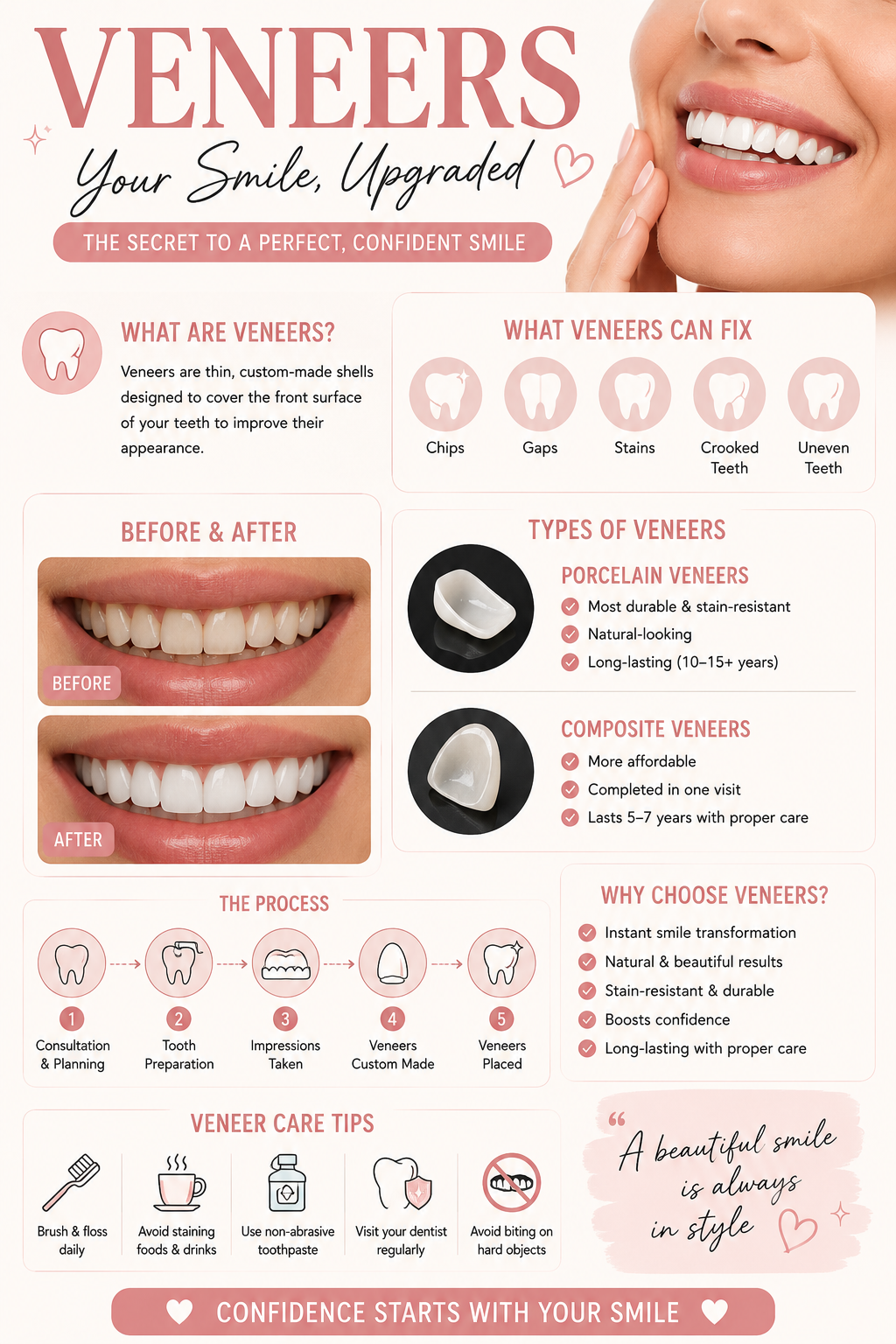
5 Reasons Why You Should Consider Veneers
1. Instant improvement in appearance
Veneers can quickly improve:
Discoloration that whitening can’t fix
Chips or worn edges
Slight misalignment or uneven teeth
They create a more balanced, symmetrical smile.
2. Natural-looking results
Modern veneers are designed to reflect light like real enamel. When done properly, they don’t look artificial. They can be customized to match your face, tooth shape, and natural style.
3. Long-lasting cosmetic solution
Porcelain veneers can last 10–15+ years with proper care. They are more durable than whitening or bonding for long-term cosmetic improvements.
4. Stain resistance
Porcelain veneers are more resistant to stains from coffee, tea, and smoking, helping your smile stay brighter for longer.
5. Fix multiple issues at once
Instead of separate treatments like whitening, bonding, and reshaping, veneers can address several concerns at the same time—color, shape, size, and small gaps.
Finally, improving the look of your teeth and smile can have a noticeable impact on your overall appearance. If you decide to get veneers, there are some things you should know about them.
Types of Veneers
There are a few different options depending on your needs and budget:
Porcelain veneers
Custom-made in a lab
Very natural-looking and stain-resistant
Long-lasting (10–15+ years)
Require some enamel removal
Composite veneers (bonding)
Built directly on the teeth using resin
Done in one visit
More affordable
Easier to repair, but less durable
More likely to stain or wear over time
Minimal-prep / no-prep veneers
Require little to no enamel removal
Potentially more reversible
Not suitable for everyone, depending on bite and alignment
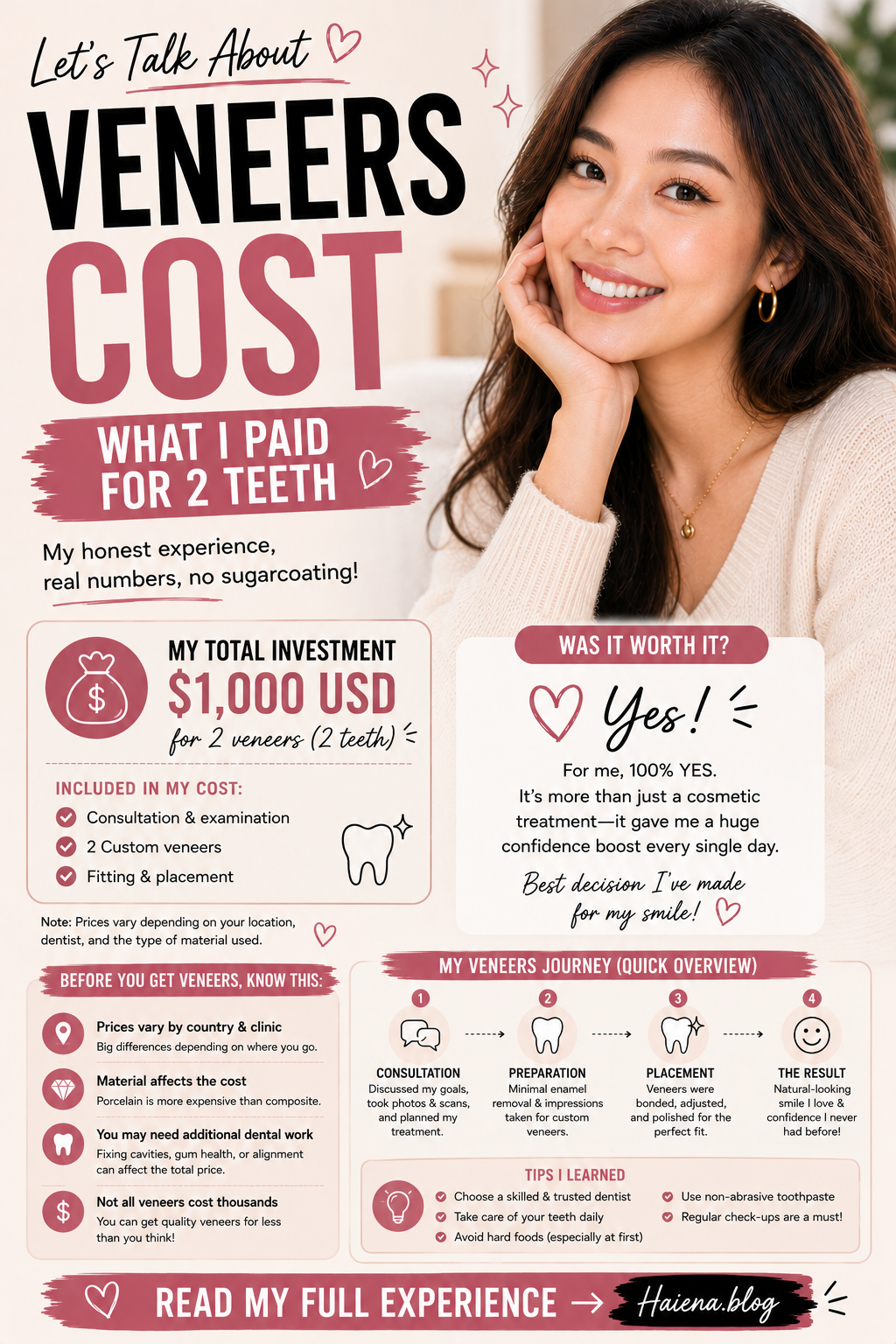
Cost of Veneers
Typical cost per tooth:
Cambodia, Thailand, Vietnam: ~$300–$800
Mexico, Turkey, Eastern Europe: ~$400–$1,000
US / UK / Australia / Western Europe: ~$900–$2,500+
I only had two teeth done, and the total cost was quite affordable. Of course, the price increases if you treat more teeth, since veneers are usually charged per tooth.
I got mine done in Cambodia, where dental work is generally more affordable. We went to a trusted dentist who has been taking care of our family for years, which also helped with the cost.

The Process of Getting Veneers
1. Consultation & planning
You discuss what you want to improve—shape, size, color, or symmetry. The dentist examines your teeth and may take scans or X-rays.
2. Tooth preparation
A thin layer of enamel is removed to make space for the veneers. Impressions or digital scans are then taken.
3. Temporary veneers (if needed)
Temporary veneers may be placed while the permanent ones are being made.
4. Fabrication
The veneers are made in a lab, usually within 1–2 weeks, matched to your natural teeth and facial features.
5. Fitting & bonding
The veneers are tested, adjusted if needed, then permanently bonded to your teeth.
6. Final adjustments
The dentist polishes everything and checks your bite for comfort and alignment.
Aftercare
Avoid biting very hard objects
Maintain good oral hygiene
Go for regular dental check-ups
Use a night guard if you grind your teeth
Final Thoughts
Getting veneers is a personal decision. For me, it was about improving my smile and feeling more confident in my appearance. It’s not about following trends, but about choosing what works for you.
If you’re thinking about it, it’s worth consulting a dentist to see what’s actually suitable for your teeth and goals.
Overall, I’m really happy with the result. The teeth came out well—I can’t even tell I had work done. Most people wouldn’t know unless I told them, and everything turned out better than expected.
