I Tried 4 Popular Diets (Egg Diet, OMAD, IU Diet & Water Fast): Fastest Ways to Lose Weight
Over the years, I've experimented with several of the internet's most popular weight-loss diets. Some helped me lose weight, while others were so restrictive that I knew I could never stick with them long term. In this post, I'm sharing my personal experience, along with what health experts say about each diet, so you can decide which approaches are realistic—and which are probably best avoided.
In this post, I'm focusing on sustainability. A diet might help you lose weight quickly, but if it leads to binge eating or causes you to regain all the weight afterward, is it really worth it?
Throughout your weight-loss journey, you've probably come across countless viral diets on social media. While many of these diets have been around for years, they continue to trend online, and many health professionals have raised concerns about their potential risks.
Most viral diets promise quick results, but many are criticized for being overly restrictive, difficult to maintain, and lacking important nutrients. Although they may produce rapid weight loss, they often aren't realistic long-term solutions.
For sustainable weight management, health experts generally recommend balanced nutrition, regular physical activity, and lifestyle changes instead of extreme dieting. Nothing in this post should be considered medical advice.
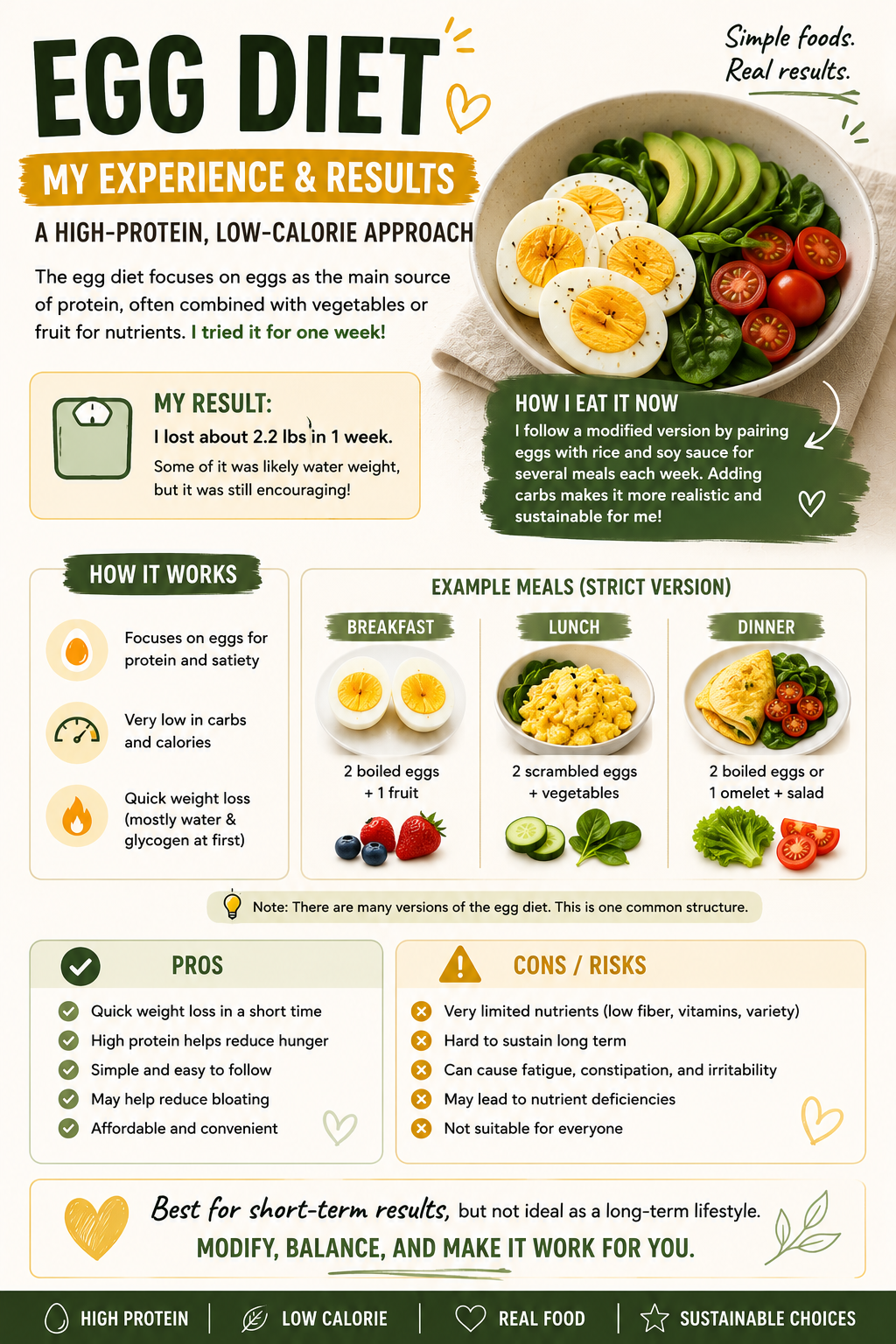
Egg Diet: My Experience with a High-Protein, Low-Calorie Approach
The egg diet is a low-calorie, high-protein eating plan where eggs are the main food source, often combined with vegetables or fruit for some variety and nutrients. Although I have seen YouTube videos of people eating only eggs for breakfast, lunch, and dinner, I found that very extreme version unrealistic.
I personally tried the egg diet for one week. However, I found it difficult to stick to a strict version of the plan, especially one that completely eliminated carbohydrates. Because of this, my results were not as significant as what others often report online.
Over the course of one week, I lost about 2.2 pounds. While I was happy with the results, they weren't as dramatic as some of the transformations I had seen online. While this was a noticeable change, it was less dramatic compared to some of the weight loss results commonly associated with this diet.
Now I follow a modified version of the egg diet by pairing eggs with rice and soy sauce for several meals each week. Adding carbohydrates makes the diet much more realistic and sustainable for my lifestyle.
How it works:
Focuses on eggs for protein and satiety
Very low in carbs and calories
Pros:
Quick weight loss (mostly water and glycogen at first)
High protein helps reduce hunger
Cons / risks:
Very limited nutrients (low fiber, vitamins, variety)
Hard to sustain long term
Can cause fatigue, constipation, and irritability
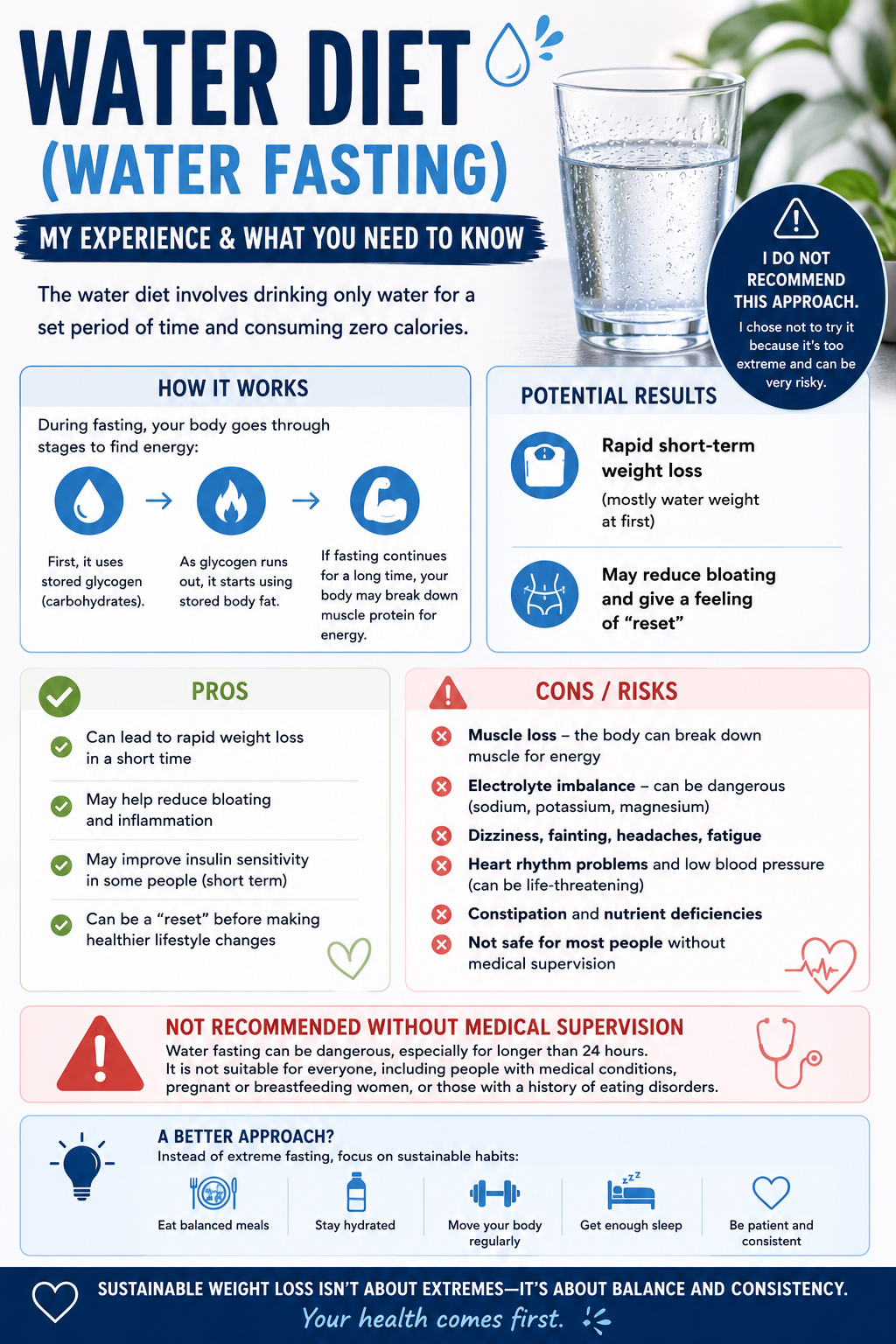
Water Diet (Water Fasting)
This type of diet involves consuming only water for a set period of time. I do not recommend this approach. I chose not to try it because it seemed too extreme and not worth the potential health risks.
That said, there are some religious fasting practices built around similar principles, although they are usually guided by specific traditions and rules.
In my opinion, a 24-hour fast should be the longest anyone attempts without medical supervision. Longer fasting periods can be challenging and may not be suitable for everyone.
How it works:
Zero-calorie intake
During fasting, your body first uses stored glycogen (carbohydrates) for energy. As those stores become depleted, it relies increasingly on body fat, but prolonged fasting can also lead to muscle loss because the body may break down protein for energy.
Pros:
Rapid short-term weight loss
Cons / risks:
Muscle loss
Electrolyte imbalance (can be dangerous)
Dizziness, fainting, heart rhythm issues
Not recommended without medical supervision
IU Diet: A Popular Low-Calorie Crash Diet
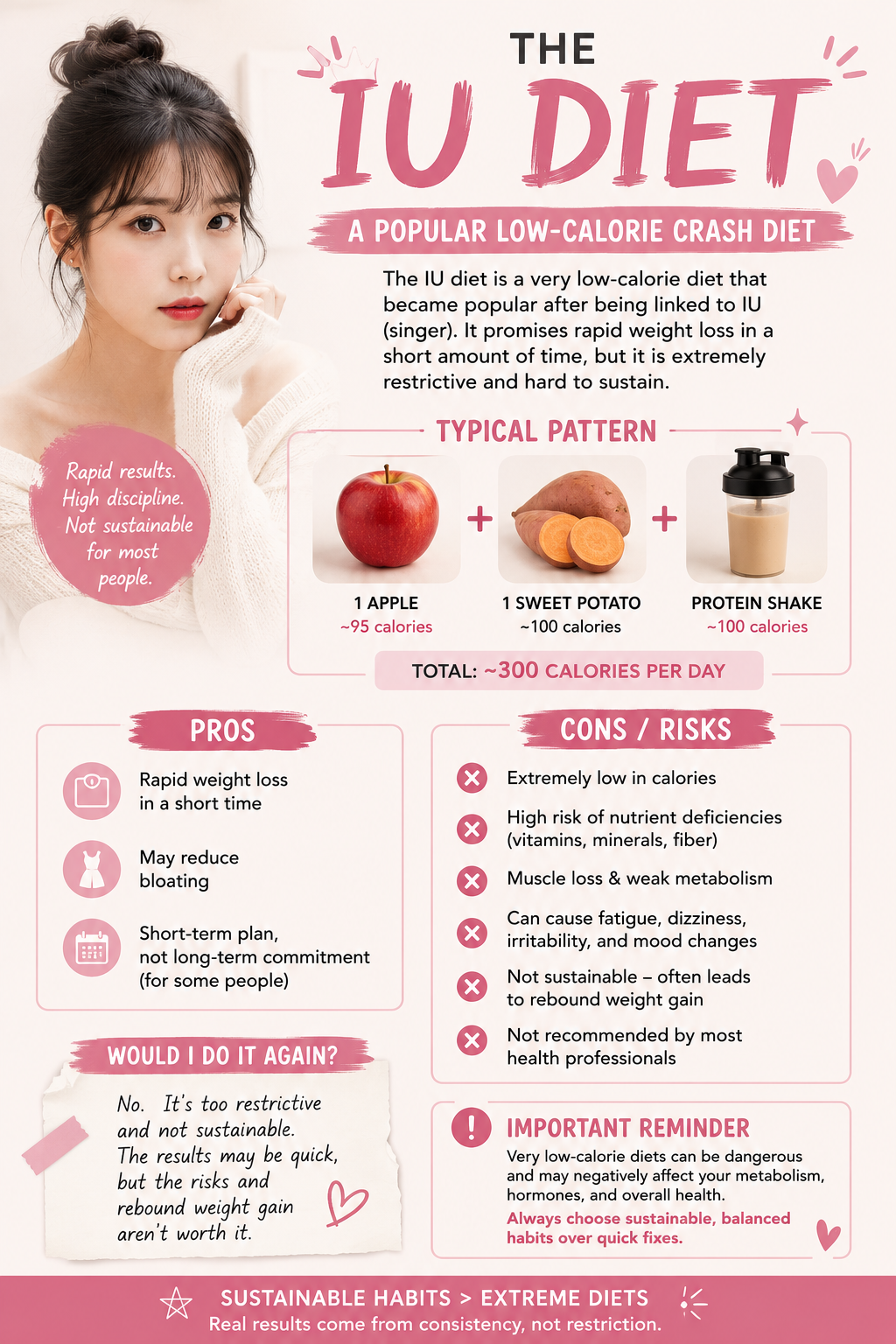
The IU diet is often associated with IU (singer). It is a very low-calorie crash diet that has been discussed online as a method for rapid weight loss.
At one point, it became extremely popular, and many people on YouTube tried or talked about it. The diet typically involves extreme calorie restriction over a short period of time while also including intense exercise, which is why it gained attention for fast results.
From what is generally understood, this is not her usual daily eating pattern, but rather something linked to preparation for performances or public appearances.
Personally, this diet looked extremely difficult to follow, and I don't think it would be sustainable for most people.
Typical pattern:
1 apple
1 sweet potato
Protein shake
Pros:
Rapid weight loss in a short time
Cons / risks:
Extremely low calories
Muscle loss and nutrient deficiencies
Not sustainable
Can trigger rebound weight gain
May negatively affect metabolism and hormones
OMAD (One Meal a Day)
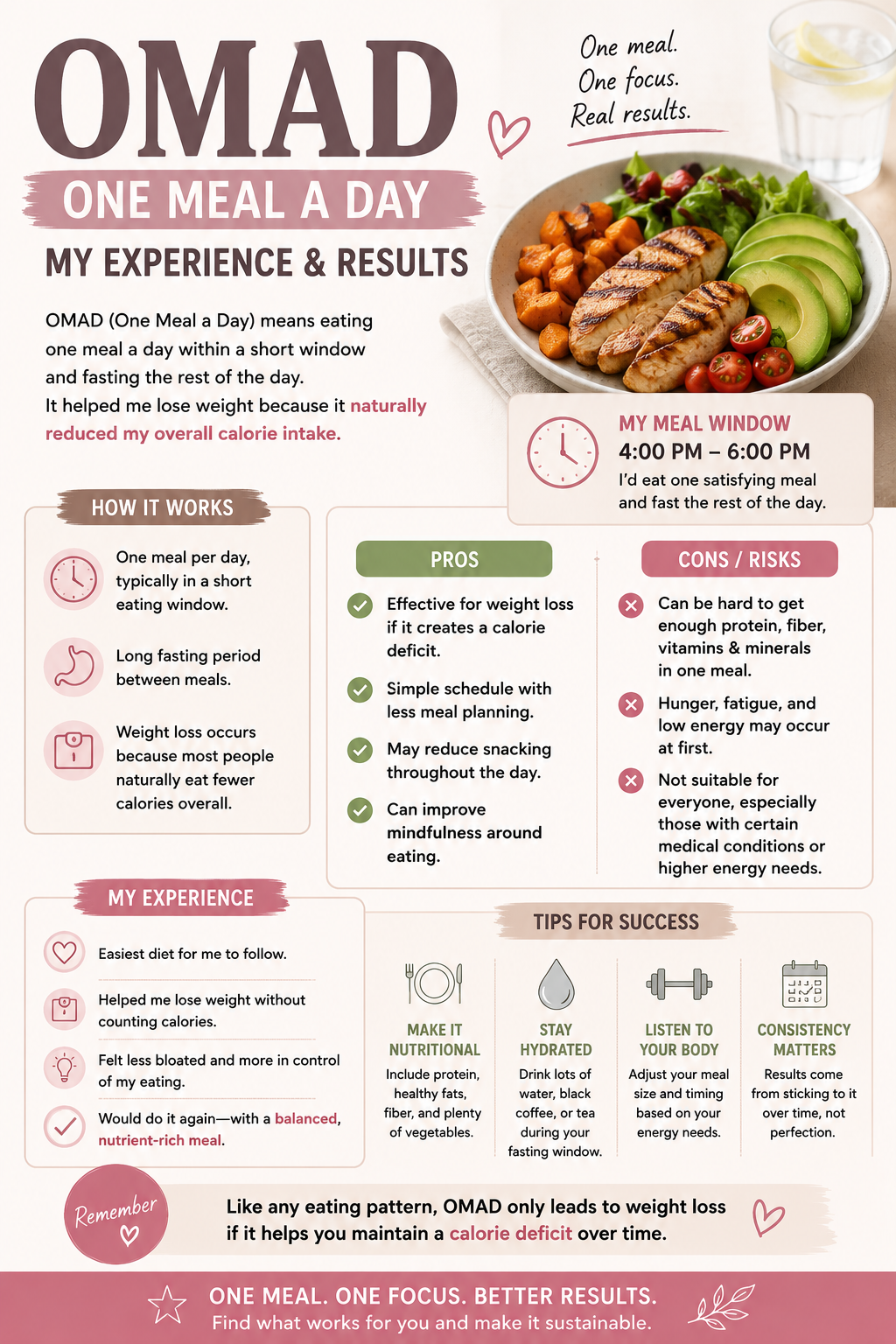
Out of all the diets I've tried, OMAD (One Meal a Day) was one of the most effective for helping me lose weight. When I was younger, I followed OMAD for an extended period. I skipped breakfast and lunch, then ate one meal between 4:00 p.m. and 6:00 p.m.
During that meal, I usually ate whatever I wanted, and I typically finished the entire meal. Even without carefully counting calories, eating within such a short time window naturally reduced how much I ate over the course of the day. Like any eating pattern, OMAD only leads to weight loss if it helps you maintain a calorie deficit over time.
For me, OMAD worked well because it was simple. I didn't have to plan multiple meals or think about food throughout the day. That said, I know it isn't for everyone. Some people may find it difficult to meet their nutritional needs or may feel overly hungry, tired, or irritable while fasting.
How it works
One meal per day, typically eaten within a short eating window.
A long fasting period between meals.
Weight loss usually occurs because many people naturally consume fewer calories overall.
Pros
Effective for weight loss if it creates a calorie deficit.
Simple meal schedule with less meal planning.
May reduce snacking throughout the day.
Cons / Risks
Can be difficult to get enough protein, fiber, vitamins, and minerals in a single meal.
Hunger, fatigue, and low energy may occur, especially when first starting.
May not be appropriate for everyone, particularly people with certain medical conditions or higher energy needs.
Would I Do It Again?
Yes—with modifications. Personally, OMAD was one of the easiest diets for me to follow, and it helped me lose weight. However, I would make sure my meal was balanced and provided enough nutrients rather than relying on whatever happened to be available.
Comparison Table
Diet Weight Loss Sustainability Would I Do It Again?
Egg Diet ⭐⭐⭐⭐☆ ⭐⭐☆☆☆ Maybe (modified)
Water Fast ⭐⭐⭐⭐☆ ☆☆☆☆☆ No
IU Diet ⭐⭐⭐⭐☆ ☆☆☆☆☆ No
OMAD ⭐⭐⭐⭐⭐ ⭐⭐⭐⭐☆ Yes (modified)
At the end of the day, focus on what makes you feel good—but also what you can actually sustain in a healthy way. If you want to try a diet for a short-term goal, like an experiment or a quick weight cut for an event, that’s your choice. Just understand that very restrictive or extreme diets often don’t hold up long-term.
When you go back to eating normally, some weight gain is common because your body replenishes water and energy stores. And if you return to your old eating habits completely, it’s likely you’ll regain the weight you lost.
In my experience, the best diet isn't the one that helps you lose the most weight in a week—it's the one you can realistically maintain for months or even years.
If you're interested in workout challenges, check out my blog post, I Tried the LE SSERAFIM Workout for a Month, where I share my experience, results, and whether it helped me lose weight.
Final Thoughts
After trying and researching several popular diets, I've learned that the best diet isn't necessarily the one that helps you lose weight the fastest—it's the one you can realistically maintain.
Many viral diets can produce short-term results, but if they're too restrictive or difficult to stick with, the weight often comes back once you return to your usual eating habits.
For me, building healthier habits, maintaining a calorie deficit, and choosing a way of eating I can enjoy long-term has been much more successful than chasing quick fixes. Sustainable weight loss may take longer, but it's far more likely to last